Category: Guides

  • USDA APHIS Import Permit for Pet Treats: What US Importers Need

    USDA APHIS Import Permit for Pet Treats: What US Importers Need

    Wholesale & private-label · US company · Supply chain outside China · FDA & USDA documentationPart of Export Partners LLC ↗
    USDA guide

    USDA APHIS Import Permit for Pet Treats: What US Importers Need

    Animal-origin dog chews from many countries need a USDA APHIS permit and a veterinary health certificate before they can enter the US. Here is how the permit side works.

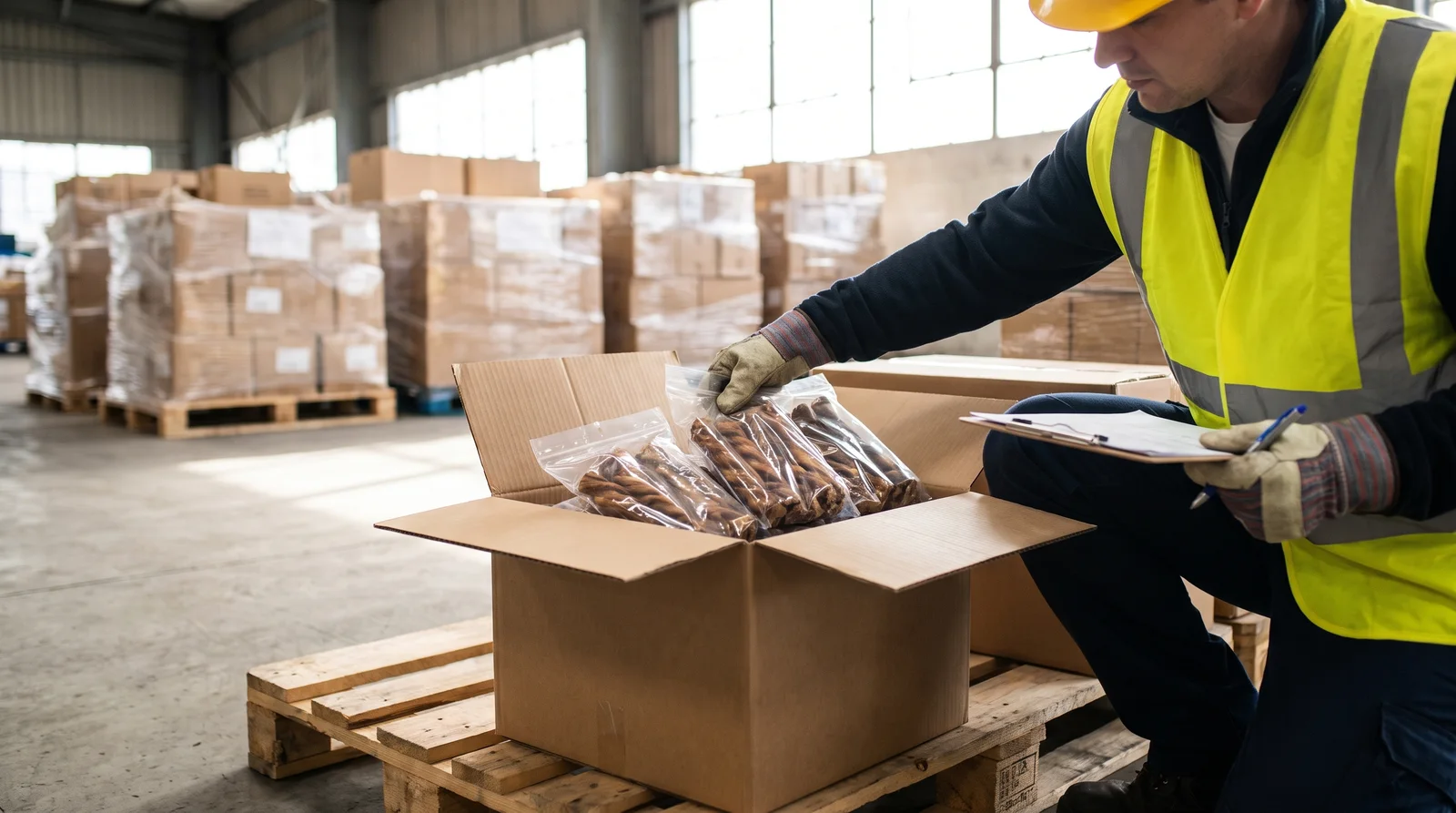
    Importer reviewing a USDA import permit and veterinary health certificate for natural dog chews

    A USDA APHIS import permit is the federal authorization that allows animal-origin pet food, treats and chews to enter the United States from countries where livestock diseases exotic to the US are present. For natural dog chews made from beef, lamb or goat, it is usually the first document a US importer has to line up, and it has to be in place before the goods ship.

    What APHIS regulates and why

    The FDA looks at pet treats as animal food. The USDA Animal and Plant Health Inspection Service (APHIS) looks at something different: whether the animal material in the product could carry a livestock disease into the US. That is why the permit question depends on the raw material and the country of origin, not on the brand or the retailer.

    According to the FDA’s own import guidance, a USDA APHIS Veterinary Services (VS) permit is required for animal food that contains animal-origin material from countries with livestock diseases exotic to the United States. Most single-ingredient chews, such as bully sticks, trachea, ears and cheek rolls, fall into this group.

    The two documents that travel together

    In practice, importers deal with a pair of documents:

    • USDA APHIS VS import permit, issued to the US importer, which states the product, origin and the conditions the shipment must meet.
    • Veterinary health certificate, issued by the veterinary authority of the exporting country, which confirms the product was produced and treated under those conditions.

    The permit sets the conditions; the certificate proves each shipment meets them. One without the other is not enough at the border.

    Import permitVeterinary health certificate
    Who holds or issues itIssued by APHIS to the US importerIssued by the exporting country’s veterinary authority
    How oftenValid for a period and the products it listsOne for each shipment
    What it saysProducts, origin and import conditionsThat this shipment meets those conditions
    Who checks itReviewed at entry against the goodsReviewed at entry against the permit and invoice

    Who applies, and when

    The permit is held by the US importer of record, not by the foreign producer. The application is filed with APHIS online, and the importer describes the product, its processing and the origin country. Because processing review can take time, the permit should be requested well before the first production run, not after the goods are ready.

    A good supplier helps here by providing an accurate product description, processing details and the facility information APHIS asks for. That information also needs to match what the veterinary certificate will later state.

    How the application usually runs, step by step

    1. Confirm with your supplier the exact products, species and origin you plan to import.
    2. Collect a written process description for each product: raw material, treatment, drying or cooking, and packing.
    3. Create or use your account in APHIS’s online permitting system and start a Veterinary Services import application.
    4. Describe each product clearly and attach the supporting information APHIS requests.
    5. Answer any follow-up questions from APHIS reviewers promptly and consistently.
    6. Once the permit is issued, send a copy to your supplier so the health certificate wording can be prepared to match.
    7. Keep the permit on file with your customs broker and check its validity before each order.

    Forms, systems and review practices can change, so check the current instructions on the APHIS website or with a customs broker who handles animal products before you apply.

    Processing details matter

    APHIS decisions often turn on how the product was made: the raw material, the treatment it went through and how it was packed. Ask your supplier for a clear process description for each SKU. Vague descriptions slow down permit reviews and lead to questions at entry.

    A useful process description names the species and body part, the country of origin of the raw material, each processing step with its purpose, how the finished product is protected from recontamination, and how it is packed. Keep the same wording in the application, the invoice and the health certificate.

    What the health certificate usually covers

    The exact wording depends on the permit conditions, but a veterinary health certificate for pet chews commonly identifies the exporter and consignee, describes the product and quantity, references the producing facility, and includes statements about the origin of the raw material and the treatment applied. The certificate is signed and stamped by an official veterinarian in the exporting country.

    Ask your supplier for a draft before the shipment is loaded and have your customs broker compare it with the permit. Small wording differences are much easier to fix before the goods leave than at a US port.

    Keep a copy of every certificate with the related invoice and permit. If a later shipment raises a question, a consistent record of earlier entries makes it easier to show that the same product has cleared before under the same conditions.

    Common mistakes

    • Shipping before the permit is issued.
    • A health certificate that does not match the permit conditions or the product description.
    • Changing the product, for example adding flavoring or basting, without checking whether the permit still covers it.
    • Assuming a permit for one origin or one product covers another.
    • Letting the permit lapse between orders without noticing.
    • Using different product names on the invoice, the certificate and the packaging.

    How the APHIS permit fits with FDA and customs

    The APHIS permit is one part of a wider entry. The producing facility also needs FDA food facility registration, each shipment needs FDA Prior Notice before arrival, and the customs broker files the entry with CBP. Our FDA requirements guide for dog treats covers the FDA side, and the importer’s compliance guide shows how all the pieces line up for one shipment.

    How Chewport handles the APHIS side

    Chewport works with partner facilities in Turkiye that produce for the US market. We prepare the product and process information for your permit application and coordinate the veterinary health certificate on the supplier side, so the paperwork matches before the container is loaded. Our compliance and logistics page explains how the tasks are split between us and the importer.

    Frequently asked questions

    Do all dog treats need a USDA permit?

    No. The requirement depends on whether the product contains animal-origin material and on the country it comes from. Natural chews made from beef, lamb or goat from countries with exotic livestock diseases generally need one.

    Who holds the APHIS permit, the supplier or the importer?

    The US importer. The supplier provides the product and process information and the veterinary health certificate for each shipment.

    Can I use one permit for several products?

    Only if the permit covers them. Check the permit conditions before adding new products or a new origin.

    How long does it take to get an APHIS import permit?

    Review times vary with the product, the completeness of the application and APHIS workload. Apply well before your first production run and check current processing information with APHIS.

    Is there a fee for the permit?

    APHIS may charge user fees for import permits. Check the current fee schedule on the APHIS website or with your customs broker before applying.

    What happens if a shipment arrives without the right documents?

    The shipment can be held, refused entry or required to be re-exported or destroyed, depending on the case. That is why the permit and the health certificate should be confirmed before the goods are loaded.

    Planning your first import?

    Tell us the products and origin you are considering, and we will map the permit and certificate steps that apply.

    Request a quote
    Chewport

    The US-facing pet line of Export Partners LLC. Wholesale and private-label functional chews, natural dog chews and freeze-dried treats, sourced in Turkiye with FDA and USDA compliance handled on the supplier side.
    Company

    Export Partners LLC ↗ info@chewport.com +1 210 756 2033 San Antonio, Texas 78228, USA Amazon SPN Verified Service Provider
    © 2026 Chewport — part of Export Partners LLC, San Antonio, TX. All rights reserved.
  • Importing Dog Chews and Treats into the United States: A Buyer’s Compliance Guide

    Importing Dog Chews and Treats into the United States: A Buyer’s Compliance Guide

    Wholesale & private-label · US company · Supply chain outside China · FDA & USDA documentationPart of Export Partners LLC ↗
    US import guide

    Importing Dog Chews into the US: A Buyer’s Compliance Guide

    Importing pet chews into the US is a predictable paperwork exercise once you know which agency cares about what. Here is the buyer’s checklist.

    Inspector checking a carton of imported dog chews at a US port warehouse

    Bringing dog chews and freeze-dried treats into the United States is mostly a paperwork exercise, and the paperwork is predictable once you know which agency cares about what. This guide walks a US importer through the checks that matter before the first container ships.

    The short version: the producing facility must be registered with the FDA, animal-origin products usually need a USDA APHIS import permit and a matching veterinary health certificate, every shipment needs FDA Prior Notice, and the retail label has to meet FDA and state feed rules. A customs broker ties it together at entry. The rest of this page explains each piece and the order in which to line them up.

    Who regulates pet chews at the US border

    Two federal agencies do most of the work. The FDA treats pet food and treats as food, so the producing facility and the product labeling fall under food rules. The USDA APHIS cares about the animal-origin part, because chews are made from beef, lamb, goat and similar materials, and animal products crossing the border need import permits and health documentation.

    Two more parties complete the picture. US Customs and Border Protection (CBP) handles the entry itself, the tariff classification and country of origin marking. State feed control officials enforce labeling at the point of sale, and many states expect pet food and treat products to be registered before they are sold there.

    WhoWhat they look atWhat you will see on paper
    FDAFacility registration, product safety, labeling, shipment noticeFacility registration number, Prior Notice confirmation
    USDA APHIS Veterinary ServicesDisease risk from animal-origin materialImport permit, veterinary health certificate
    CBPEntry, classification, duties, origin markingEntry filing, commercial invoice, packing list
    State feed controlRetail labeling, product registration where requiredState registration or license, label approval

    FDA: facility registration and prior notice

    The foreign facility that makes the product should be registered with the FDA as a food facility. For each shipment, FDA prior notice is filed before arrival. There is no “FDA approval” stamp for a chew, and any supplier claiming one is describing something that does not exist. What exists is a registered facility, compliant labeling, and clean entry filings.

    Behind the registration sits the FDA’s preventive controls rule for animal food, which expects most facilities to follow current good manufacturing practice and run a written food safety plan based on a hazard analysis. On the US side, importers may also have duties under the Foreign Supplier Verification Program, depending on the product and the parties involved. Our FDA requirements guide for dog treats covers these points in more detail.

    USDA APHIS: the animal-origin permit

    Because chews are rendered or dried animal parts, APHIS import conditions apply and typically require a permit and a health certificate from the country of origin. The exact conditions depend on the species and the processing, so the safest path is to confirm the permit language with your supplier before production, not after the goods are on the water.

    The permit is held by the US importer. The health certificate is issued for each shipment by the veterinary authority in the exporting country and has to match what the permit says. For a closer look at how the application works and the mistakes that slow it down, see our guide to the USDA APHIS import permit for pet treats.

    Labeling before it reaches the shelf

    US retail and marketplace listings expect an ingredient statement, a guaranteed analysis where applicable, net weight, and the name and address of the responsible party. If you are selling under your own brand, that responsible party is usually you, which means the label is your asset and should be finalized before the run, not improvised at the dock.

    Imported packs also need a clear country of origin marking, such as “Product of Turkiye”. Labels built to AAFCO model regulations are the practical way to meet most state requirements, and the dog treat label checklist lists each element.

    Customs entry and the practical timeline

    A customs broker files the entry, ties it to the FDA prior notice and the APHIS documentation, and clears the goods. When the facility is registered, the permit is in hand and the labels are correct, entries are routine. Most delays come from a missing document, not from the product itself.

    At entry, the FDA can review, examine or sample a shipment, and APHIS documentation is checked against the goods. Timing varies by port, by season and by whether a shipment is selected for examination, so build some buffer into your launch plan and ask your broker what is typical at your port of arrival.

    What the document pack for one shipment looks like

    A clean shipment usually travels with the same set of papers every time. Ask your supplier to send drafts before the goods are loaded so your broker can review them.

    DocumentPrepared byWhat to check
    Commercial invoiceSupplierProduct description, quantities and values match the packing list
    Packing listSupplierCarton count, weights and lot codes
    Bill of lading or air waybillCarrier or forwarderConsignee and notify party are correct
    Veterinary health certificateExporting country veterinary authorityWording matches the APHIS permit conditions
    APHIS import permit (copy)US importerProduct and origin are covered and the permit is valid
    FDA Prior Notice confirmationBroker or importerFiled before arrival, facility registration number included
    Certificate of analysisSupplier or its laboratoryLot numbers match, pathogen results are reported

    Step by step: your first import

    1. Agree on the product list and a written specification for each SKU.
    2. Confirm the supplier’s FDA facility registration and ask for its food safety documentation.
    3. Apply for the APHIS import permit using the product and process details from the supplier.
    4. Finalize and review the label, including country of origin marking.
    5. Check state registration requirements for the states where you will sell.
    6. Approve pre-production samples against the specification.
    7. Review the draft document pack with your customs broker before loading.
    8. Ship, file Prior Notice and the entry, and keep copies of every document for the next order.

    After the first entry, repeat shipments follow the same path. Most of the effort is front-loaded into the first order.

    Common mistakes that hold shipments at the border

    • Booking the shipment before the APHIS permit is issued.
    • A health certificate whose wording does not match the permit or the invoice.
    • Prior Notice filed late or with a facility registration number that does not match the producer.
    • Adding a new SKU, flavor or coating without checking whether the permit still covers it.
    • Labels without country of origin marking or with unsupported health claims.
    • Product descriptions that differ between the invoice, the certificate and the packaging.

    Questions to ask a supplier before the first order

    • What is your FDA facility registration number, and who is your US agent?
    • Which pathogen tests do you run on finished product, and can I see recent reports?
    • Can you provide a process description for each SKU for the APHIS permit application?
    • Who arranges the veterinary health certificate, and can I see a draft before shipment?
    • Have you shipped this product type to US importers before?
    • How are lots coded, and how would a lot be traced if a retailer asked?

    A supplier that answers these in writing is usually one that has done US shipments before. You can read how we split these tasks on our compliance and logistics page.

    Frequently asked questions

    Is there an FDA certificate for dog chews?

    No. The FDA registers facilities and reviews labeling and entries; it does not issue a per-product approval certificate for chews. A registered facility plus compliant labeling is what a serious buyer verifies.

    Do I need a USDA permit to import beef or lamb chews?

    Animal-origin products generally fall under USDA APHIS import conditions, which commonly require a permit and a health certificate. Confirm the exact conditions for your species and process before production.

    Can the supplier handle the compliance side?

    A capable supplier registers the facility, provides the origin health documentation and prepares compliant labels, so the US buyer mainly manages the customs entry through a broker.

    Do I need a customs broker to import dog treats?

    It is not strictly required, but most importers use a licensed customs broker because the entry has to be tied to FDA Prior Notice and APHIS documents. A broker who handles food and animal products regularly will spot mismatches before they cause a hold.

    Who files FDA Prior Notice for each shipment?

    Usually the customs broker or the importer files it before the goods arrive. The supplier provides the facility registration number and product details needed for the filing.

    Do I need to register dog treats with individual states?

    Many states expect pet food and treat products to be registered or licensed before they are sold there. Requirements differ, so check with the feed control office of each state where you plan to sell.

    Talk to a supplier, not a broker

    Tell us your product group, target market and volumes, and we will come back with a quote and the compliance steps that actually apply.

    Request a quote
    Chewport

    The US-facing pet line of Export Partners LLC. Wholesale and private-label functional chews, natural dog chews and freeze-dried treats, sourced in Turkiye with FDA and USDA compliance handled on the supplier side.

    Company

    Export Partners LLC ↗ info@chewport.com +1 210 756 2033 San Antonio, Texas 78228, USA Amazon SPN Verified Service Provider
    © 2026 Chewport — part of Export Partners LLC, San Antonio, TX. All rights reserved.