Wholesale Bully Sticks: How to Choose a Supplier
Bully sticks are one of the best-selling natural chews in the US. Buying them wholesale is about consistency, documentation and honest specifications.
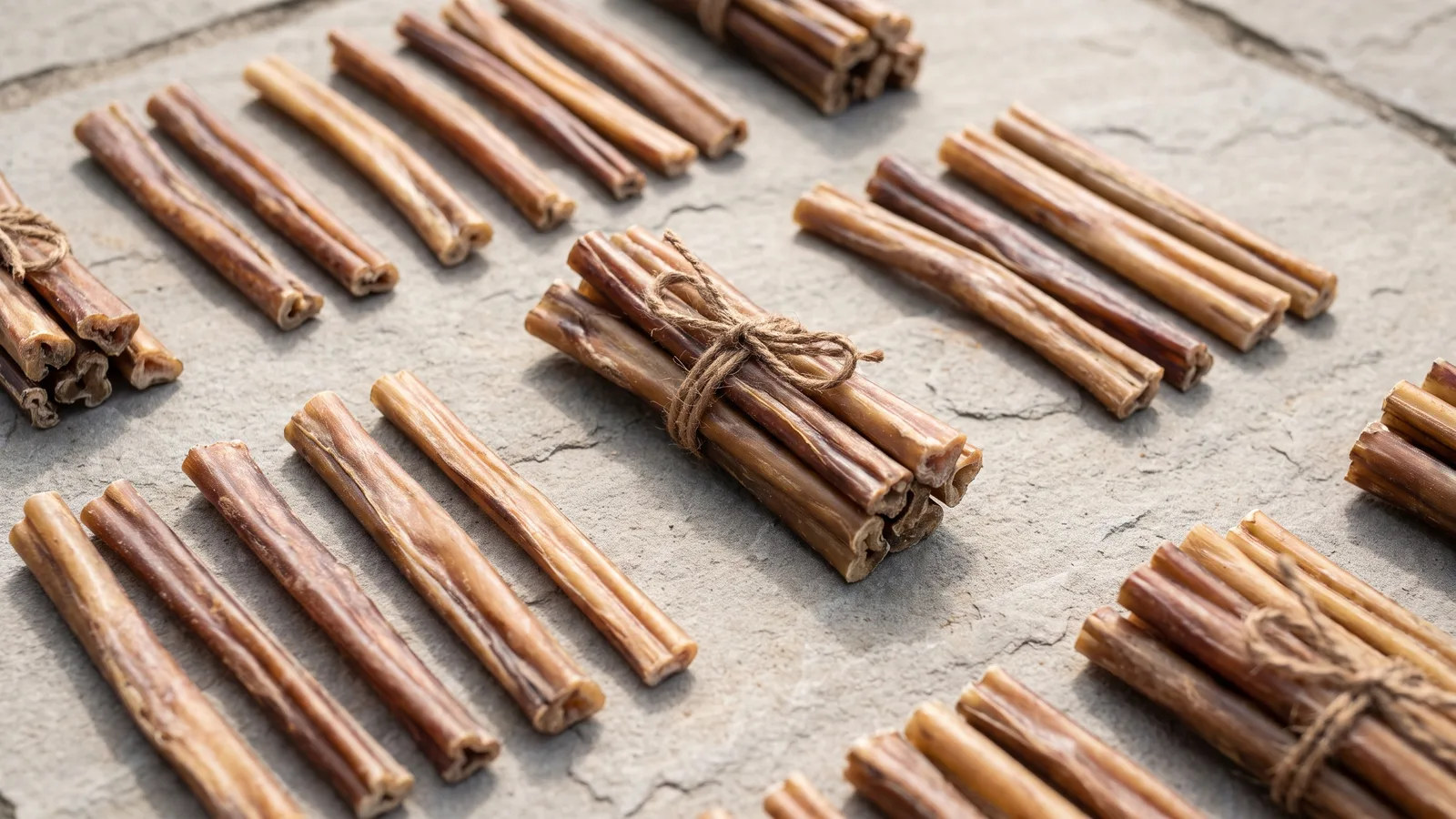
Wholesale bully sticks are single-ingredient dog chews made from dried beef pizzle, sold in bulk to brands, distributors and retailers. They are a high-demand product in the US, and because the raw material is natural, the difference between suppliers shows up in consistency, safety testing and documentation.
This guide walks through what a US buyer should specify, test and ask before placing a first wholesale order, and how to compare suppliers on more than price per piece.
What is a bully stick?
A bully stick is made from a single ingredient: beef pizzle, cleaned, shaped and dried or baked. Variants include straight sticks, braids, rings and odor-reduced versions. Our guide to odor-free bully sticks explains what low odor means and how to specify it. Because there is only one ingredient, the quality of the raw material and the drying process decide the result.
Bully sticks sit in the long-lasting segment of natural chews, next to cheek rolls and tendons. If you are building a wider range, our overview of types of natural dog chews shows where they fit against lighter chews such as ears and lung.
Which bully stick formats do US buyers stock?
Most US ranges are built from a small set of formats. Each format has its own processing steps and its own points to agree on with the supplier.
| Format | Typical use | What to specify |
|---|---|---|
| Straight sticks | Core retail item, sold singly or in packs | Length, thickness grade, weight range per piece |
| Braided sticks | Premium, longer chewing time | Number of strands, braid tightness, finished length |
| Rings and shapes | Gift and seasonal ranges | Diameter, closure method, weight |
| Odor-reduced sticks | Buyers who want indoor-friendly chews | Cleaning and drying method, how odor is assessed |
| Bites and pieces | Training and small dogs, use of off-cuts | Piece size range, weight per bag |
How should sizing and grading be specified?
US retail usually sells bully sticks by length, such as 6 inch and 12 inch, and by thickness grades. Agree on length tolerance, thickness grade and weight range in your specification. Without that, cartons can vary from shipment to shipment.
A practical specification states three things for each SKU: the nominal length and the accepted tolerance, the thickness grade with a measurable definition (for example a diameter range or weight per inch), and the pieces per carton or net weight per carton. If you sell by count, define how undersized or broken pieces are handled. If you sell by weight, define the minimum piece length so a bag is not filled with short ends.
Ask the supplier to photograph a reference set for each grade next to a ruler. That set becomes the shared standard for every future shipment and makes disputes much easier to resolve.
Why do odor and moisture matter?
Odor depends on cleaning and drying. Odor-reduced sticks take longer to process. Moisture affects shelf life and weight; ask for the target moisture range and how it is measured.
Moisture has a commercial side as well. A stick that is sold by weight but carries extra moisture costs you more per usable piece, and a stick that is too moist can develop mold in storage. A stick that is over-dried may become brittle and splinter. Agree on a target range, the test method and how often it is checked, and ask to see results in the batch report rather than only in the general specification.
What safety testing should a bully stick supplier provide?
Bully sticks are handled by people at home, so pathogen control matters. Ask for certificates of analysis that include Salmonella testing on finished product, and ask how often testing is done. The FDA considers pet food contaminated with Salmonella to be adulterated.
When you review a certificate of analysis, check that it names the product, the lot number and the production date, that the lot number matches the carton marking, and that the laboratory and test method are identified. A report that cannot be tied to a specific lot is of limited use if a question comes up later.
- Salmonella on finished product, per lot or at an agreed frequency
- Moisture, and where relevant water activity
- Any other microbiological tests your retailer or distributor requires
- A description of the kill step in the process, such as the drying or baking conditions
The supplier’s facility should also run a written food safety plan. For animal food sold in the US, FDA rules under the Food Safety Modernization Act, including the Preventive Controls for Animal Food requirements, apply to many facilities, foreign facilities included. Ask the supplier how its plan covers pathogen control and how records are kept.
Which import documents do bully sticks need?
Because bully sticks are of bovine origin, imports from many countries require a USDA APHIS import permit and a veterinary health certificate, in addition to FDA facility registration and Prior Notice for each shipment. Confirm who prepares each document before the order is placed.
| Document | Who usually handles it | Note |
|---|---|---|
| FDA food facility registration | Producing facility | Ask for the registration details before ordering |
| USDA APHIS import permit | US importer | Apply early; conditions vary by product and origin |
| Veterinary health certificate | Exporting country’s veterinary authority | Must match the permit conditions |
| FDA Prior Notice | Importer or customs broker | Filed for each shipment before arrival |
| Customs entry | Licensed customs broker | Filed with CBP, usually with a customs bond |
Requirements change and depend on the exact product and origin, so confirm current conditions with USDA APHIS and your customs broker. The full sequence is covered in our article on the USDA APHIS import permit for pet treats.
What packing options exist for wholesale and private label?
- Bulk cartons for repacking, with lot numbers on every carton
- Retail-ready pouches or shrink-wrapped bundles under your brand
- Moisture-barrier packaging and clear storage instructions
For private label, the supplier packs to your approved artwork. Your label still needs to meet US requirements, including a product name, net quantity, ingredient statement, guaranteed analysis, the name and address of the responsible company and a country of origin marking. Many states also require pet treat registration before sale.
How do you evaluate bully stick samples?
A sample shipment is the cheapest way to avoid an expensive first order. Treat it as a test, not a formality.
- Measure a set of pieces against the agreed length and thickness grades
- Weigh pieces and compare against the specification
- Check color and surface consistency across the set
- Smell the product after it has been sealed for a few days
- Bend test a few pieces for brittleness or splintering
- Check that the sample comes with a batch report and lot number
Keep a few reference pieces from the approved sample. When the first full order arrives, compare them side by side.
What are common mistakes when buying bully sticks wholesale?
- Comparing quotes on price per piece without matching size, grade and weight
- Placing the order before the USDA permit is in place
- Accepting a general specification without lot-level test reports
- Leaving label review until the packaging is already printed
- Skipping moisture-barrier packaging to save cost, then losing stock in storage
Supplier checklist
- Single-ingredient specification with size, grade and moisture
- FDA facility registration
- Batch test reports including Salmonella
- USDA and veterinary certificate support
- Sample shipment before the first full order
Questions worth asking in the first call: how raw material is sourced and inspected, how many grades the facility runs, how lots are numbered, how often finished product is tested, which documents come with each shipment, and how claims about out-of-specification cartons are handled.
Chewport supplies bully sticks and other natural chews from partner facilities in Turkiye, with the document pack and samples available to qualified buyers.
Frequently asked questions
What are bully sticks made of?
A single ingredient: beef pizzle, cleaned and dried or baked.
Do imported bully sticks need a USDA permit?
Usually yes when they come from countries with livestock diseases exotic to the US. The importer holds the permit and each shipment travels with a veterinary health certificate.
Can I sell bully sticks under my own brand?
Yes. Private label is common; you approve the label and packaging, the producer works to the agreed specification.
How do I compare bully stick quotes from different suppliers?
Compare like for like: the same length, thickness grade, weight range, packing and documents. A lower price per piece often reflects a thinner grade or looser tolerance.
What test reports should come with each shipment?
At minimum a certificate of analysis tied to the lot number, including Salmonella on finished product and moisture. Your distributor or retailer may ask for more.
Are odor-free bully sticks completely odorless?
Usually not. Odor-reduced sticks are processed to lower the smell, but some natural odor remains. Evaluate samples after they have been sealed for a few days.
How are bully sticks made?
The raw pizzle is cleaned, shaped or braided, dried or baked, then cut, graded by length and thickness and packed. Each step affects odor, color and consistency, which is why buyers ask for the process description.
How long does a bully stick last?
It depends mainly on thickness, length and format, and on how strongly the dog chews. Thick and braided sticks last longest. For a range, specify thickness grades so each size band gives a predictable chew time.
Why do bully sticks vary in thickness and color?
The raw material is natural, so thickness differs from animal to animal, and drying temperature and time change the color. Grading by weight or thickness and an agreed tolerance keep packs consistent. Uniform color across every piece is not a sign of quality on its own.
Looking for a bully stick supplier?
Tell us sizes, grades and volumes, and we will send a quote and samples.
Request a quoteThe US-facing pet line of Export Partners LLC. Wholesale and private-label functional chews, natural dog chews and freeze-dried treats, sourced in Turkiye with FDA and USDA compliance handled on the supplier side.
Leave a Reply