Types of Natural Dog Chews: A Wholesale Buyer’s Guide
Natural dog chews cover dozens of products. Here are the main types US buyers stock, and what to check for each.
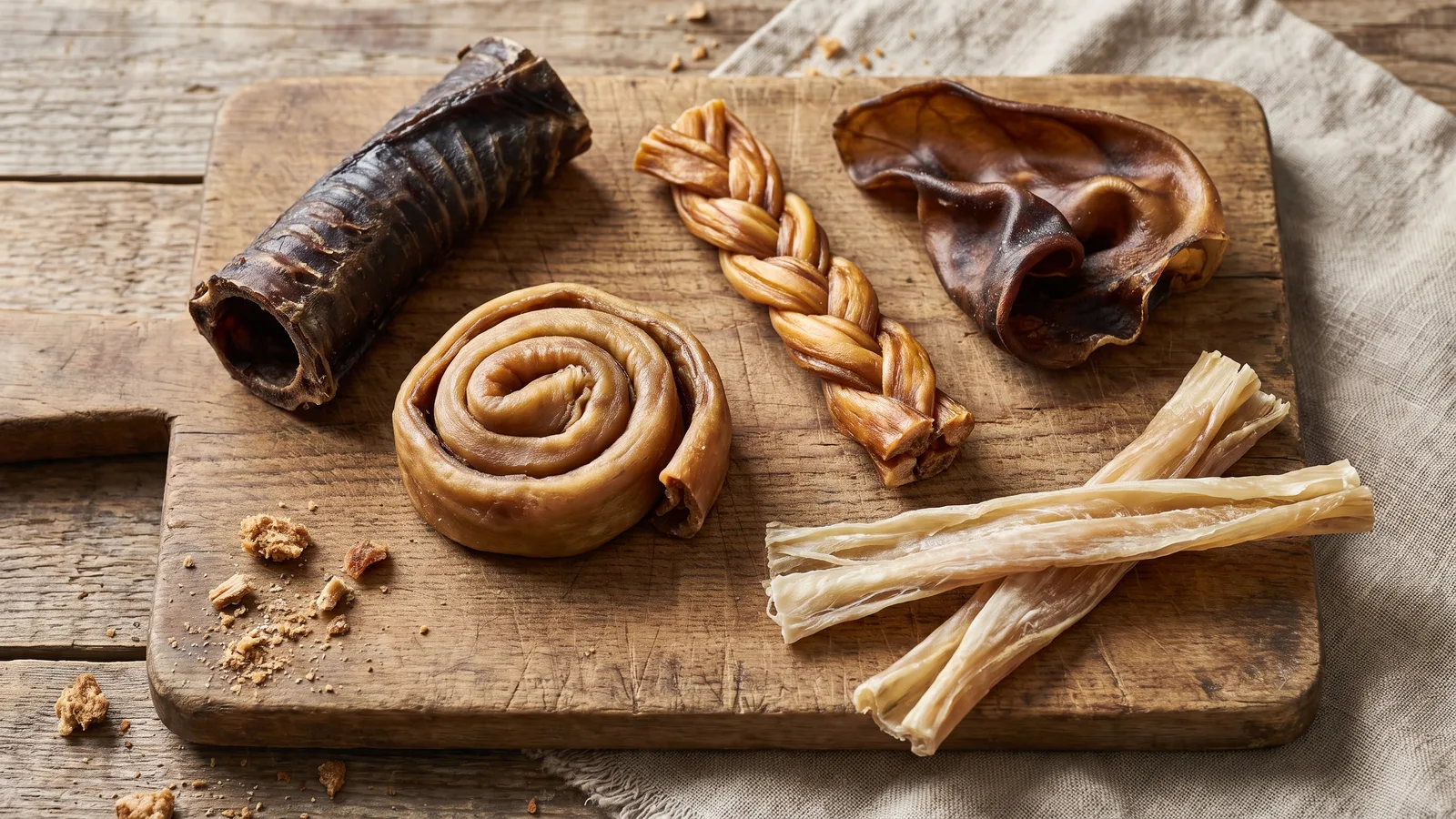
Natural dog chews are single-ingredient or minimally processed chews made from animal parts such as beef pizzle, trachea, cheek, ears and tendons, dried or baked without artificial additives. For a wholesale buyer, the range is wide, and each type has its own sizing, texture and documentation points.
This guide groups the main types by species and chewing time, explains what to specify for each, and shows how US brands usually build a first range without overcommitting on volume.
Which beef chews are most common?
- Bully sticks: beef pizzle, straight, braided or ring-shaped, sold by length and thickness
- Beef trachea: a lighter, crunchier chew, often sold whole or in pieces
- Beef cheek rolls: rolled cheek meat, a long-lasting chew
- Beef ears: a softer chew for smaller dogs
- Tendons: dense, long-lasting chews
Bully sticks are usually the anchor product because demand is steady and shoppers know the name. If they are the first item on your list, our guide to choosing a wholesale bully sticks supplier covers grading and testing in detail.
Why add lamb and goat chews?
Lamb and goat chews, such as ears, horns and lung pieces, offer alternative proteins for dogs that do better without beef. They are also a way for brands to build a broader range from one supplier.
Alternative proteins also help on the shelf. A range that offers beef, lamb and goat options can speak to owners who rotate proteins or who are looking for a novel protein, without the brand needing several suppliers. When adding these items, ask the supplier which species and parts are available year-round, since some by-products depend on seasonal slaughter volumes.
How do natural chews compare on texture and chewing time?
Buyers usually group chews by how long they last: light chews such as ears and lung, medium chews such as trachea, and long-lasting chews such as bully sticks, cheek rolls and tendons. A balanced range covers all three. For head-to-head comparisons, see beef trachea vs bully sticks, collagen sticks vs bully sticks and cow ears vs pig ears.
| Chew | Species | Texture | Chewing time | Typical buyer |
|---|---|---|---|---|
| Bully stick | Beef | Firm, dense | Long | Core range, all dog sizes by thickness |
| Cheek roll | Beef | Firm, layered | Long | Strong chewers |
| Tendon | Beef | Very dense | Long | Medium and large dogs |
| Trachea | Beef | Crunchy, hollow | Medium | Mid-price range |
| Ears | Beef, lamb, goat | Softer, thin | Short | Small dogs, light treat |
| Lung pieces | Beef, lamb | Light, airy | Short | Training and small dogs |
| Horn | Goat | Hard | Long | Alternative long-lasting option |
Chewing time depends on the dog, the size of the piece and the drying method, so use these groupings as a starting point and confirm with samples.
Where do freeze-dried treats fit next to natural chews?
Freeze-dried treats are a different category: meat, organ or fish pieces with the water removed at low temperature, usually used as training rewards or meal toppers rather than long-lasting chews. Many brands stock both because they serve different moments in the day. If you plan to add them, expect different specification points, such as residual moisture, piece size and oxygen and moisture barrier packaging.
What should you check for every type of natural chew?
- A single-ingredient specification with size, weight and moisture
- Finished-product test reports, including Salmonella
- FDA facility registration
- USDA APHIS permit and veterinary health certificate for animal-origin products
- Labeling that names the exact part and species
The same checklist applies to every product in the range, but the details differ. Ears and lung are thin and dry quickly; tendons and cheek rolls are dense and need longer drying to reach a stable moisture level. Ask the supplier for the target moisture per product, not one figure for the whole range, and make sure each test report is tied to a lot number that appears on the carton.
How should each chew be specified?
A clear specification protects both sides. For each SKU, agree on the following before the first order:
- Species and part, named exactly as they will appear on the label
- Size: length, width or diameter, with tolerances
- Weight range per piece, or net weight per bag for pieces
- Moisture target and test method
- Color and surface appearance, with reference photos
- Packing: pieces or weight per carton, carton marking, pallet pattern
- Shelf life and storage conditions
Reference photos with a ruler in the frame are simple and very effective. They become the standard you compare every future shipment against.
How should natural chews be packed and stored?
Natural chews are dried products, so the main risks in storage are moisture uptake, mold and breakage. Bulk cartons for repacking should carry a liner or inner bag, a lot number and a production or best-before date on every carton. Retail packs work best in resealable pouches with a moisture barrier, and some products such as ears and lung benefit from rigid packs or careful cartoning because they break easily.
Ask the supplier how the stated shelf life was set, which pack it applies to, and what storage conditions are assumed. A shelf life tested in a sealed barrier pouch does not automatically carry over to a paper bag or a shrink-wrapped bundle. Store cartons off the floor, away from heat and humid walls, and rotate stock by lot.
How do you evaluate samples across a range?
When samples of several products arrive at once, evaluate them in the same way so the comparison is fair. Measure and weigh a set of pieces, check color consistency, note the smell after the pack has been sealed for a few days, and test how each product breaks or splinters. If you work with a retail partner or a small group of customers, short feedback on palatability and chewing time is useful before you fix the launch list.
How do US brands build a first natural chew range?
Most US brands start with three to five products: one bully stick format, one long-lasting chew and one or two lighter chews. Starting small makes it easier to test sell-through before larger orders.
A simple starting structure might look like this: a 6 inch bully stick as the anchor, a cheek roll or tendon for strong chewers, beef ears or lung for small dogs, and one lamb or goat item as an alternative protein. Once sell-through data comes in, add sizes or bundles to the products that move fastest.
What are common mistakes when sourcing natural chews?
- Launching too many SKUs before sell-through is known
- Using generic names such as “beef chew” instead of the exact part on the label
- Ordering lamb or goat items without checking year-round availability
- Planning production before the USDA permit conditions are confirmed
- Treating all products as having the same moisture and shelf life
Labeling deserves its own review. Our article on dog treat label requirements explains the AAFCO model labeling points that many states follow.
Chewport supplies natural beef, lamb and goat chews and freeze-dried treats from partner facilities in Turkiye. See our natural chews range.
Frequently asked questions
What counts as a natural dog chew?
A chew made from a single animal part, or a minimally processed product, without artificial additives.
Which natural chews last longest?
Bully sticks, cheek rolls and tendons are usually the longest-lasting; ears and lung pieces are lighter.
Do all natural chews need USDA paperwork?
Animal-origin chews from many countries need a USDA APHIS permit and veterinary health certificate. Check the requirements for each product and origin.
How many products should a first order include?
Many brands start with three to five products covering light, medium and long-lasting chews. That keeps the first order manageable and gives clear sell-through data.
Can one supplier provide beef, lamb and goat chews?
Often yes. Ask which items are available year-round and whether each product comes with its own specification and test reports.
How should natural chews be labeled?
With the exact species and part, a guaranteed analysis, ingredient statement, net quantity, the responsible company’s name and address and the country of origin. Check state registration rules where you sell.
Are natural chews an alternative to rawhide?
Many single-ingredient chews, such as bully sticks, trachea, ears and collagen rolls, are sold as rawhide-free alternatives. They are made from one animal part and dried, rather than from processed hide sheets. Our comparison of collagen sticks vs bully sticks covers the closest case.
How should a chew range be sized?
Most brands group sizes by dog weight bands and print a size guide on the pack. For wholesale, agree length, thickness and weight range for each band with the supplier, so the size guide on your label matches what is in the bag.
Building a natural chew range?
Tell us the products you want to start with, and we will send specifications and a quote.
Request a quoteThe US-facing pet line of Export Partners LLC. Wholesale and private-label functional chews, natural dog chews and freeze-dried treats, sourced in Turkiye with FDA and USDA compliance handled on the supplier side.
Leave a Reply