Collagen Sticks vs Bully Sticks: A Wholesale Buyer’s Comparison
Both are single-animal, beef-based chews that sell well in the US. They come from different raw materials, which changes odor, chew time, price stability and how you position them on the shelf.
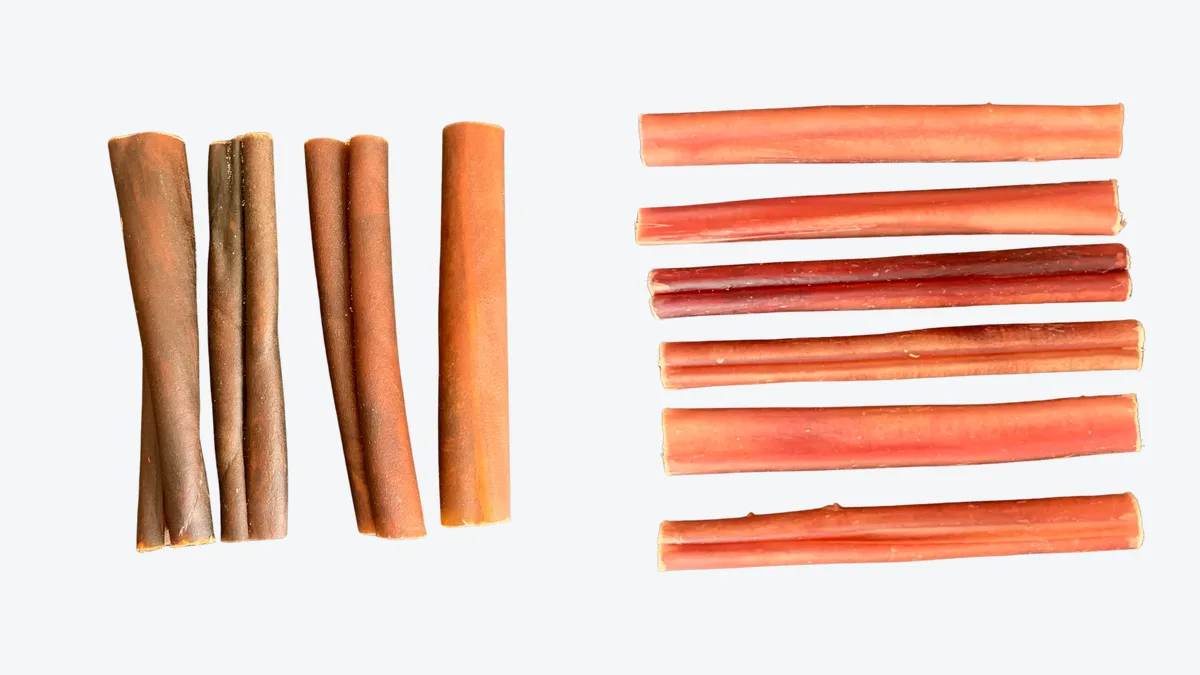
Collagen sticks vs bully sticks is one of the most common comparisons US dog owners search for, and it is a practical question for anyone building a natural chew range. A bully stick is dried beef pizzle. A collagen stick is made from the inner layer of beef hide, cleaned, rolled and dried. Both are long-lasting chews, but they behave differently in the bag, on the shelf and in the supply chain.
This guide compares the two from a wholesale buyer’s point of view: what each product is, how they differ in odor and chew time, why their prices move differently, and what to specify when you order either one.
What is a bully stick?
A bully stick is a single-ingredient chew made from beef pizzle that is cleaned, shaped and dried or baked. It is sold straight, braided, twisted or cut into bites. Because each animal yields one pizzle, raw material supply is limited and price tends to follow cattle slaughter volumes. Our guide to wholesale bully sticks covers grades, sizing and testing in detail.
What is a collagen stick?
A collagen stick (also sold as a collagen roll) is made from the inner layer of beef hide, the corium, which is rich in collagen. The hide is cleaned, cut, rolled or twisted and dried. It is often marketed as an alternative to rawhide. Processing methods vary between suppliers, so ask how the hide is cleaned and dried rather than relying on the product name.
Collagen sticks vs bully sticks: side by side
| Point | Bully sticks | Collagen sticks |
|---|---|---|
| Raw material | Beef pizzle, one per animal | Inner layer of beef hide |
| Typical odor | Natural odor, odor-reduced versions exist | Usually milder |
| Chew time | Long, depends on thickness | Long, depends on roll density and diameter |
| Price stability | Follows limited pizzle supply | Hide supply is larger, prices tend to move less |
| Sizing consistency | Natural variation in thickness | Easier to cut and roll to a set diameter |
| Shelf position | Premium, well-known name | Rawhide alternative, value or mid range |
Which lasts longer?
Chew time depends more on format than on the material name. A thick, tightly braided bully stick can outlast a loosely rolled collagen stick, and a dense collagen roll can outlast a thin straight bully stick. For a fair comparison, agree on diameter, length and weight per piece with your supplier and test samples with the dog sizes you are targeting.
Odor: why collagen sticks are often milder
Bully stick odor mostly comes from residues in the pizzle and from how far the drying goes. Hide-based collagen sticks start from a different tissue and are usually milder. If odor is a buying point for your customers, both products can be specified with odor in mind; our page on odor-free bully sticks explains what to ask for.
Are collagen sticks the same as rawhide?
Not exactly. Both come from beef hide, but rawhide traditionally uses the hide as a sheet and is often processed with additional treatments, while collagen sticks are usually marketed as made from the inner layer and rolled. Since the term is not regulated, the honest answer for a buyer is to ask for the process description and a specification sheet, and to keep any digestibility claims on the pack backed by data.
Price: why the gap between the two can change
Bully stick prices react to the availability of pizzle, which is tied to slaughter volumes and strong global demand. Collagen sticks use hide, a much larger raw material stream, so their price tends to be more predictable. Many retailers stock both: bully sticks as the premium item and collagen sticks to cover a lower price point without leaving the single-ingredient category.
What to specify when ordering either one
Put the same points in writing for both products: length and diameter or thickness grade, weight range per piece, moisture target, odor expectation, packing (bulk cartons or retail bags), and the test reports that travel with each lot. For a wider view of the category, see our overview of types of natural dog chews.
Import documents are the same for both
Both chews are of animal origin, so imports into the US generally need the same paperwork: USDA APHIS requirements for the animal-origin material, FDA facility registration for the producer and FDA Prior Notice for each shipment. Our compliance and logistics page explains who prepares each document.
Packing and private label options
Natural chews such as collagen sticks and bully sticks are usually bought in two ways: bulk cartons for repacking or retail-ready bags under the buyer’s own brand. Chewport ships either way, with retail bags in 100g, 250g, 500g and 1 kg sizes. Cut length, bag format and artwork are set per order, and the US label is reviewed before printing. Our private label dog treats guide walks through the steps.
Questions to ask a supplier before the first order
- Which facility produces the product, and is it registered with the FDA?
- How is the raw material cleaned and dried, and what is the moisture target?
- Which test reports travel with each lot, and is Salmonella tested on finished product?
- What weight range or count per kilogram is guaranteed, and how are off-spec pieces handled?
- Who prepares the USDA APHIS documents, the veterinary certificate and FDA Prior Notice?
- Can you send samples from a production lot rather than a hand-picked batch?
Our guide on how to vet a dog treat supplier covers each of these points in more depth.
Which should you stock?
If your customers ask for a well-known premium chew, bully sticks are the anchor. If you need a milder odor, a steadier price or a rawhide alternative, collagen sticks fill that slot. Most ranges benefit from both, sized for small, medium and large dogs. Chewport supplies bully sticks and beef collagen rolls from partner facilities in Turkiye, with samples and the document pack available to qualified buyers.
Frequently asked questions
Are collagen sticks or bully sticks better for dogs?
Neither is better for every dog. Bully sticks are the classic premium chew; collagen sticks are usually milder in odor and steadier in price. The right choice depends on chew strength, size and what your customers prefer.
Are collagen sticks the same as rawhide?
Both come from beef hide, but collagen sticks are usually made from the inner layer and rolled, while rawhide is processed as a sheet. Ask your supplier for the exact process.
Can puppies have collagen sticks or bully sticks?
Many brands sell smaller sizes for puppies with supervision. Label guidance on age and size is the brand’s decision and should follow veterinary advice.
Are collagen sticks safe for dogs?
Like any chew, they should be sized to the dog and given with supervision. For wholesale, ask for lot-based test reports, including Salmonella on finished product.
Comparing collagen sticks and bully sticks for your range?
Tell us sizes and volumes for each, and we will send a quote and samples.
Request a quoteThe US-facing pet line of Export Partners LLC. Wholesale and private-label functional chews, natural dog chews and freeze-dried treats, sourced in Turkiye with FDA and USDA compliance handled on the supplier side.
Leave a Reply