Wholesale Freeze-Dried Dog Treats: What US Buyers Should Check
Freeze-dried single-ingredient treats sell on simplicity. Buying them wholesale is less simple. Here is what to check before you place a bulk order.
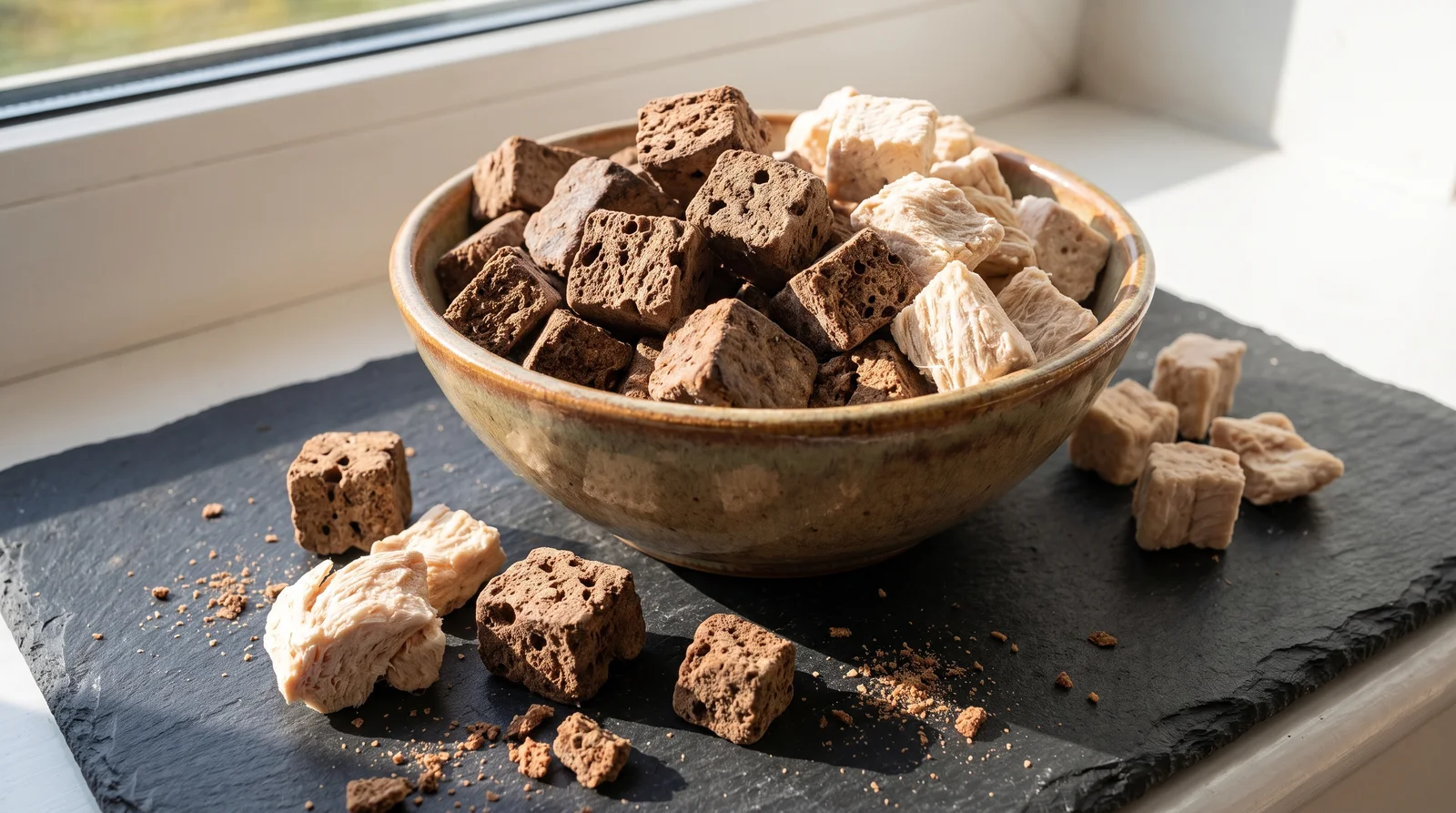
Freeze-dried dog treats have moved from a niche product to a standard shelf item in US pet stores and on Amazon. Most of them are single-ingredient: beef liver, chicken breast, lamb lung, salmon. That simplicity is the selling point for the end customer, but for a brand or distributor buying wholesale, the questions are about consistency, documentation and how the product travels.
What freeze-drying actually does
Freeze-drying removes water from raw or lightly prepared meat at low temperature under vacuum. The result is a light, shelf-stable treat that keeps much of the raw material’s colour and texture. Because the product is low in moisture, it can be stored and shipped without refrigeration, as long as the packaging keeps moisture and oxygen out.
For a buyer, this means two things matter more than with baked treats: how dry the finished product is, and how well it is packed.
Which freeze-dried proteins sell, and what to watch
A wholesale range usually starts with a few proteins that cover different price points and textures. The table below is a starting point for a quote request, not a fixed list.
| Protein | Typical format | Buyer note |
|---|---|---|
| Beef liver | Cubes or chunks | A common entry product; check piece size consistency |
| Chicken breast | Cubes or strips | Light and crumbly; packaging protects against breakage |
| Lamb lung | Chunks | Very light, so pack counts and fill weights need care |
| Salmon or white fish | Cubes or bites | Odor and oxidation control matter; ask about barrier packaging |
| Beef heart or kidney | Cubes | Often used to extend a single-protein line |
If you also sell long-lasting chews, our guide to natural chew types helps pair the two ranges.
Specification: agree on it in writing
Before the first order, ask for a product specification for each SKU. A useful spec covers the raw material and its origin, the piece size or cut, the target moisture or water activity range, the packing format and the shelf life the producer stands behind. Single-ingredient products should list exactly one ingredient; if the spec mentions additives, ask why.
The spec is also what you compare future shipments against. Without it, a change in cut or dryness is hard to argue about.
Test reports that matter for the US
The FDA regulates pet treats as animal food, and it considers pet food contaminated with Salmonella to be adulterated. For raw-material-based treats, ask the supplier which microbiological tests are run on finished product, how often, and by which laboratory. Salmonella is the first item on that list; many buyers also ask about Listeria and E. coli.
Ask to see recent reports rather than a statement that testing is done. A supplier that tests routinely will have them on file. Check that the lot numbers on the report match the lot codes on the cartons, and that the report states the method and the laboratory. More on the federal side is in our FDA requirements guide for dog treats.
Facility registration and animal-origin paperwork
A facility that manufactures or packs pet food for the US market needs to be registered with the FDA. Because freeze-dried treats are made from animal materials, shipments also fall under USDA APHIS rules for animal products, which can mean an import permit and a health certificate depending on the material and origin. Confirm who prepares these documents and when, before the goods are produced.
Labeling for the US shelf
US pet treat labels follow FDA rules and, in most states, AAFCO model regulations: product name, net quantity, ingredient statement, guaranteed analysis, the name and address of the responsible company and feeding directions where relevant. If you sell under your own brand, the label is yours to approve, so have it reviewed before the print run, not after the goods arrive.
Freeze-dried products are light, so net quantity in ounces and grams has to be checked carefully against the actual fill weight. Our dog treat label checklist covers each required element.
Packaging and shelf life
Freeze-dried treats pick up moisture quickly once exposed to air. Resealable pouches with a moisture and oxygen barrier, and in many cases an oxygen absorber, are standard. Ask how the shelf life on the spec was determined and whether it assumes a specific pack. Bulk cartons for repacking need the same attention, because the product will sit in a warehouse before it is portioned.
Pouch size also affects the customer experience. Large pouches of very light product look under-filled when the treats settle in transit, so agree on a fill level and pouch size that look right on the shelf.
How to evaluate a freeze-dried sample
- Dryness: pieces should be light and crisp through the center, without soft or chewy spots.
- Color: close to the raw material, without dark burnt edges or grey patches.
- Breakage: open a pouch after shipping and check how much has turned to crumbs.
- Odor: a clean meat or fish smell; a rancid note, especially in fish, is a warning sign.
- Pack check: reseal and reopen the pouch over a few days to see whether pieces soften.
- Documents: the sample should arrive with its spec sheet and, ideally, a lot test report.
Minimum order, lead time and private label
Wholesale terms vary by producer and by material. Expect to agree on a minimum order per SKU, a production lead time and a payment structure. For private label, add the time needed to design and approve your packaging. Starting with a small range of two or three proteins makes it easier to test sell-through before committing to larger volumes.
Before you sign, ask these questions in writing:
- What is the minimum per SKU and per pack size?
- Which tests are run on every lot, and who pays for them?
- What shelf life do you guarantee, and in which packaging?
- Which documents travel with each shipment?
- How are out-of-spec lots handled?
How Chewport works with buyers
Chewport supplies freeze-dried and natural dog treats produced in Turkiye for US brands and distributors. We share specifications and supporting documents with qualified buyers, and we handle the FDA and USDA paperwork on the supplier side so the product arrives ready for the US market. You can see the current range on our freeze-dried treats page.
Frequently asked questions
Are freeze-dried dog treats raw?
Many are made from raw meat that is freeze-dried without cooking. Ask the supplier how the product is processed and which pathogen tests are run, because that is what US regulators and retailers look at.
Do freeze-dried treats need refrigeration?
No, not while the pack is sealed. Once opened, they should be kept closed and dry, as the label directs.
Can I sell freeze-dried treats under my own brand?
Yes. Private label is common in this category. You approve the label and packaging; the producer manufactures to the agreed specification.
Can I buy freeze-dried treats in bulk for repacking?
Yes, many buyers order bulk cartons and pack in the US. Make sure the bulk packaging has a moisture barrier and that your repacking site follows US animal food rules for packing.
Why does the same treat weigh differently from lot to lot?
Freeze-dried pieces vary in size and density, so a fixed count can weigh differently. Agree whether packs are filled by weight or by count, and print the net quantity accordingly.
Do freeze-dried treats need a USDA permit to enter the US?
Animal-origin treats can fall under USDA APHIS import conditions depending on the material and the country of origin. Confirm the requirements for each protein with your supplier and customs broker before production.
What is the difference between air-dried and freeze-dried treats?
Air-dried treats are dried slowly with warm air and end up denser and chewier. Freeze-dried treats are frozen first, then the water is removed under vacuum, so they stay light and keep their shape. Both are shelf stable when packed correctly.
Looking for a freeze-dried treat supplier?
Tell us your proteins, pack sizes and volumes, and we will come back with a quote and the compliance steps that apply.
Request a quoteThe US-facing pet line of Export Partners LLC. Wholesale and private-label functional chews, natural dog chews and freeze-dried treats, sourced in Turkiye with FDA and USDA compliance handled on the supplier side.
Leave a Reply