Probiotic Chews for Dogs: CFU, Strains and Private Label
Probiotic chews are only as good as the live count they deliver at the end of shelf life. Here is what buyers should ask before ordering wholesale.
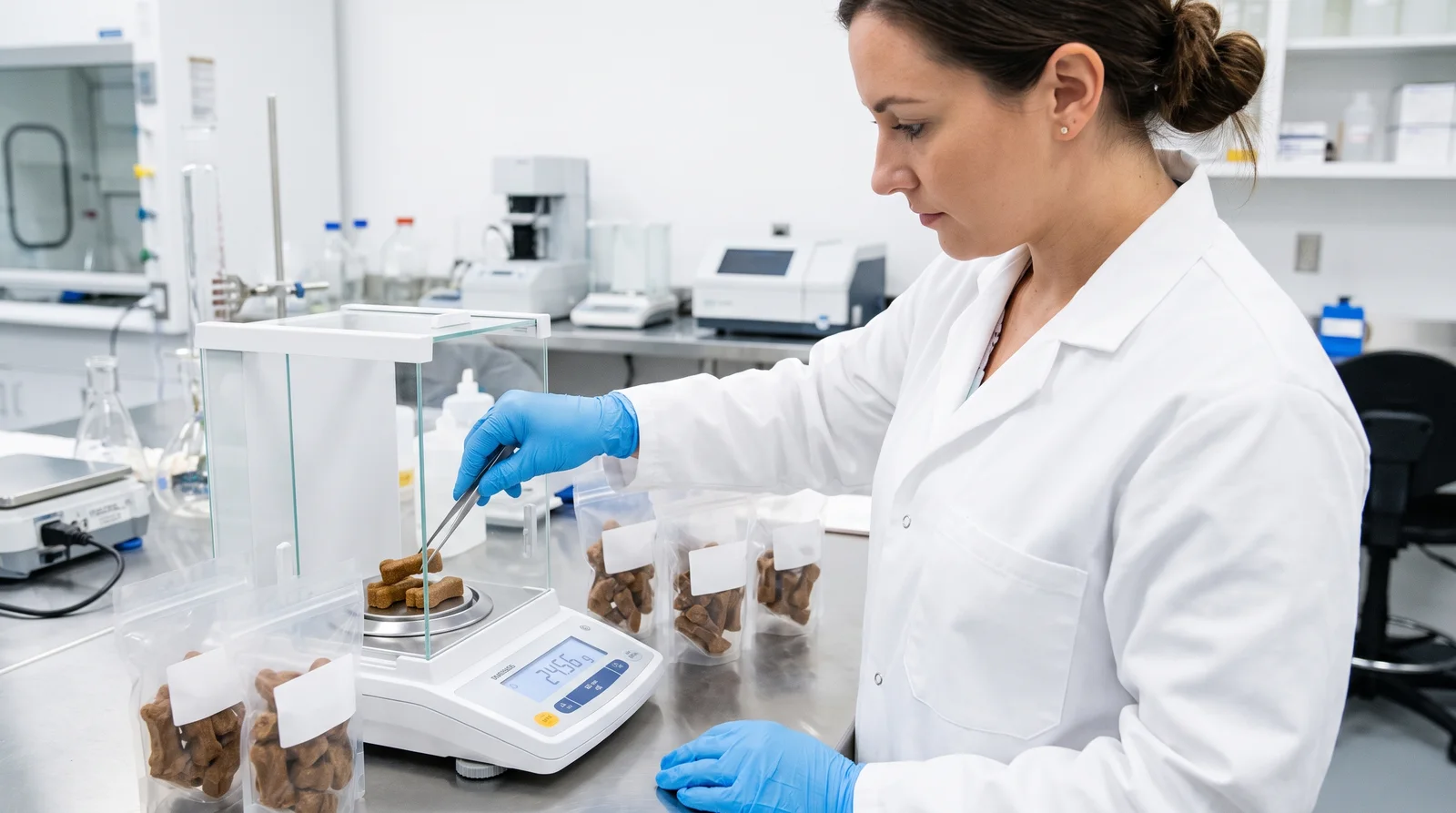
Probiotic chews for dogs are soft chews containing live beneficial microorganisms, declared in colony-forming units (CFU) per serving, often combined with prebiotic fiber such as pumpkin or inulin. Because the bacteria must survive production and storage, the key buying question is how many CFU remain at the end of the labeled shelf life.
That one question shapes almost every other decision in a probiotic chew project: which strains are used, how the chew is made, how much margin is built into the formula, how the product is packed and how it is tested.
Which strains suit probiotic chews?
Soft chews are produced with heat and pressure, so many formulas use spore-forming strains such as Bacillus subtilis or Bacillus coagulans, which tolerate processing better than many lactic acid bacteria. Ask which strains are used and why they suit the chew format.
| Strain type | Examples | Fit for soft chews |
|---|---|---|
| Spore-forming | Bacillus subtilis, Bacillus coagulans | Generally better tolerance of heat, pressure and storage |
| Lactic acid bacteria | Lactobacillus and Enterococcus species | More sensitive to heat and moisture; process and pack need careful control |
| Yeast-based | Saccharomyces species | Used in some formulas; ask for stability data in the chew format |
Ask for the strain designation as well as the species, and for the ingredient supplier’s specification. Two products listing the same species can behave very differently in a chew if the strains and their handling differ.
Should CFU be guaranteed at manufacture or at expiry?
A label should state CFU per serving. Ask whether that number is guaranteed at manufacture or through the end of shelf life, and ask for the stability data behind it. A lower number guaranteed to expiry is more useful than a higher number at day one.
Stability data usually means the finished chew, in its final pack, tested for CFU at set intervals under defined storage conditions. Ask to see the time points tested, the storage temperature and humidity, and the result at the last time point compared with the label claim. Manufacturers often add an overage at production to cover losses over time; ask how the overage is set and confirmed.
How do prebiotics and other actives pair with probiotics?
Many digestive formulas pair probiotics with fiber sources such as pumpkin, inulin or chicory root. These change texture and moisture, so the final recipe needs its own stability check.
Probiotics are also added to broader formulas, such as daily multivitamin chews. If you are considering an all-in-one product rather than a dedicated digestive chew, our guide to wholesale dog multivitamin chews covers the trade-offs. Every added active, flavor or humectant can affect water activity, and water activity affects probiotic survival.
What testing should a probiotic chew supplier run?
- CFU count on finished product per batch
- Pathogen testing of finished chews
- Moisture and water activity, which affect probiotic survival
When reviewing a certificate of analysis, check that the CFU result is reported per gram or per chew in a way you can convert to the label’s per-serving figure, that it is tied to the lot number on the carton, and that the laboratory and method are identified. A result reported per gram of chew needs the chew weight and serving size to become a label value.
How should probiotic chews be packed and stored?
Moisture is the main enemy of probiotics. Induction-sealed tubs, desiccants where appropriate and clear storage directions help protect the count through distribution.
Consider the full route the product takes: production in Turkiye, ocean or air transit, a US warehouse, then a retailer or a customer’s kitchen. Heat during transit and storage can reduce counts, so ask the supplier what storage conditions the shelf life assumes and put those conditions on the label. Opened tubs are exposed every day, which is one reason many brands choose moderate pack counts for probiotic products.
What should a probiotic chew label show?
Declare strains and CFU per serving in the Product Facts panel, with directions and cautions. Use support language, such as “supports digestive health”, rather than disease claims.
Write CFU in a consistent format, for example “1 billion CFU per serving”, and make sure the serving size in the panel matches the directions. State storage directions, such as keeping the container closed and in a cool, dry place. Claims about treating diarrhea or other conditions can change how the product is regulated; see our overview of dog supplement regulations in the US.
How do you evaluate probiotic chew samples?
A probiotic chew has to work as a treat before it can work as a supplement, because a dog that refuses it never receives the serving. Check texture, smell and color when the pack is first opened, and again after it has been opened and closed for a few weeks. Weigh a set of chews and compare against the specified chew weight, since CFU per serving depends on it. Offer samples to dogs of different sizes and note acceptance. Then ask for the certificate of analysis of the sample lot and convert its CFU result to your planned label claim, to confirm the numbers line up before any packaging is printed.
Which import documents do probiotic chews need?
Imported supplement chews need an FDA-registered production facility and FDA Prior Notice for each shipment, and the entry is filed with US Customs and Border Protection, usually by a licensed customs broker. If the formula includes animal-derived ingredients, such as a meat flavor, liver powder or dairy-based components, USDA APHIS requirements may also apply depending on the ingredient and its origin. Ask the supplier for an origin statement for each animal-derived ingredient, and confirm the requirements with your customs broker and APHIS before the first order.
How does a private-label probiotic chew project run?
- Brief: target CFU per serving, strain preference, prebiotic choice, flavor and pack
- Formula proposal with strain specifications and planned overage
- Lab samples for texture, smell and acceptance
- Stability plan in the final pack, with agreed time points
- Label and claim review against the specification
- First production run with CFU and pathogen results per batch
- Shipping with attention to temperature, then FDA Prior Notice and customs entry
Which questions should you ask a probiotic chew supplier?
- Which strains are used, with strain designations, and why for this format?
- Is the CFU claim guaranteed through the end of shelf life?
- What overage is added at production, and how was it set?
- What water activity target does the chew have?
- Which stability time points and storage conditions have been tested?
Common mistakes include comparing products on CFU at manufacture, adding prebiotics without a new stability check, and choosing a cheaper pouch without testing it.
Chewport supplies digestive and probiotic soft chews from partner facilities in Turkiye under private label. See the functional chews range.
Frequently asked questions
Why are Bacillus strains common in probiotic chews?
They form spores that tolerate heat and pressure in soft chew production better than many other strains.
What CFU number should be on the label?
The count guaranteed per serving, ideally through the end of shelf life, backed by stability data.
Do probiotic chews need special packaging?
They need protection from moisture. Induction-sealed tubs or barrier pouches are standard.
What is an overage in a probiotic chew?
An amount added above the label claim at production to allow for losses during storage. It should be confirmed by stability testing, not estimated.
Can probiotics be combined with pumpkin or inulin?
Yes, and many digestive formulas do. The combined recipe needs its own stability check because fiber sources change moisture and texture.
Does heat during shipping affect probiotic chews?
It can reduce counts, especially for less robust strains. Ask what storage conditions the shelf life assumes and plan shipping and warehousing around them.
Launching a probiotic chew?
Send us your target CFU and pack, and we will propose strains, a formula and a sample plan.
Request a quoteThe US-facing pet line of Export Partners LLC. Wholesale and private-label functional chews, natural dog chews and freeze-dried treats, sourced in Turkiye with FDA and USDA compliance handled on the supplier side.
Leave a Reply