FDA Requirements for Dog Treats: Registration, Safety and Imports
The FDA regulates dog treats as animal food. For an imported product, that means rules for the facility, the product and every shipment.
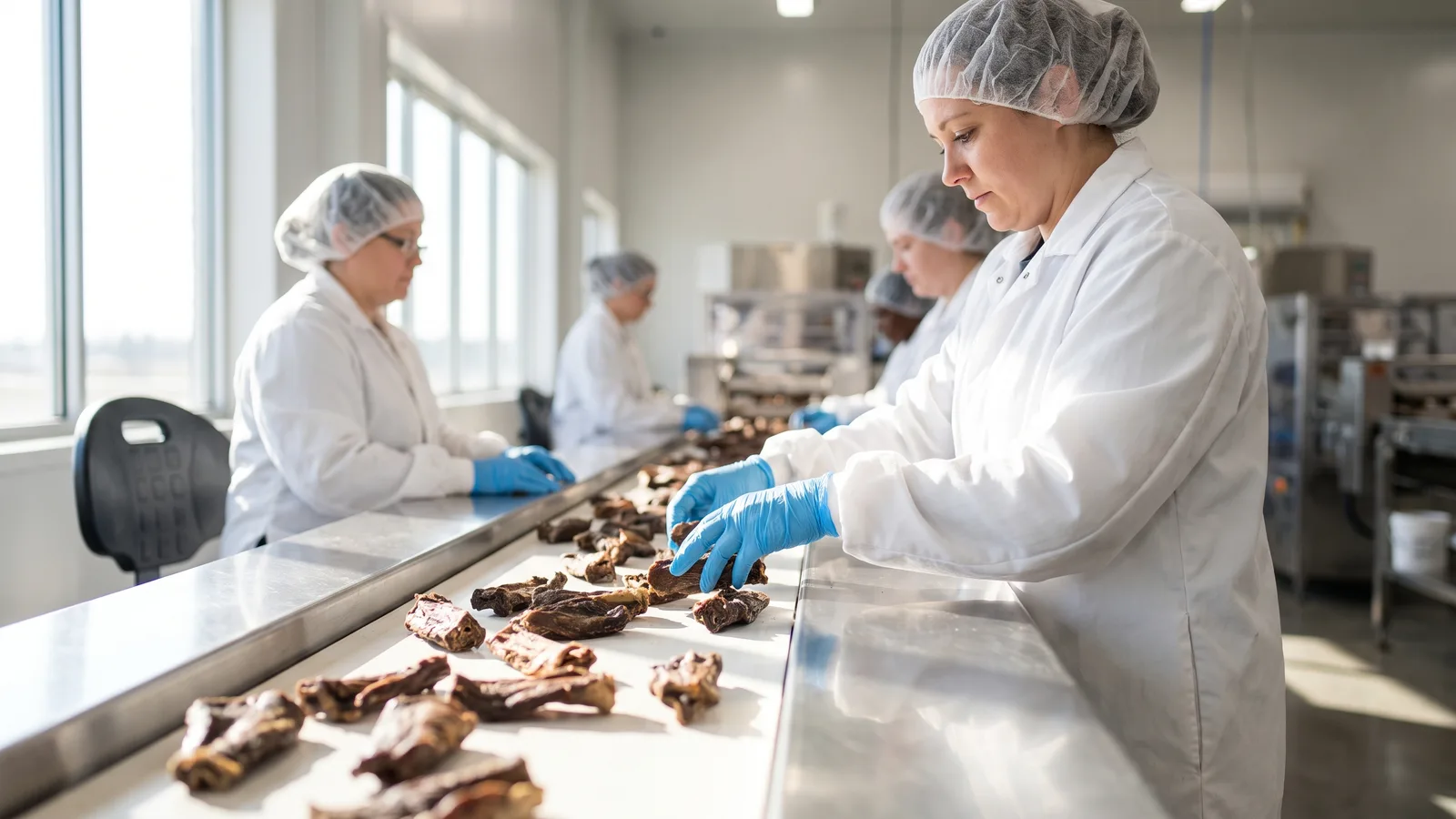
FDA requirements for dog treats are the federal rules that apply to pet treats as animal food: the producing facility must be registered with the FDA, the product must be safe and properly labeled, and imported shipments must be announced to the FDA before they arrive. For a US brand buying from overseas, these rules shape which suppliers are realistic options.
Dog treats are animal food
Under the Federal Food, Drug, and Cosmetic Act, pet food and treats are food for animals. The FDA does not pre-approve treats, but it expects them to be safe, produced under sanitary conditions, made from acceptable ingredients and truthfully labeled. Products that fall short can be refused at the border or recalled.
This is why the phrase “FDA approved” on a chew is a warning sign rather than a selling point. What a buyer can verify is a registered facility, a working food safety system, test results and a compliant label.
Facility registration
Facilities that manufacture, process, pack or hold animal food for consumption in the US, including foreign facilities, must be registered with the FDA. Registrations are renewed every two years, in the period from October to December of even-numbered years. A US buyer should confirm the supplier’s registration is current before placing an order.
The FDA does not publish a public lookup of every facility registration, so buyers usually ask the supplier for the registration number and confirm it through their customs broker or compliance adviser when the first Prior Notice is filed.
Foreign facilities also designate a US agent as part of registration. The registration number is used in Prior Notice filings, so it needs to match the facility that actually produced the goods, not a trading company or a sister plant.
Preventive controls and good manufacturing practice
The FDA’s preventive controls rule for animal food sets current good manufacturing practice (CGMP) requirements and, for most facilities, a written food safety plan based on a hazard analysis. For raw-material-based chews, the key hazards are usually biological, so buyers should ask how the supplier controls pathogens and how that is verified.
In a chew facility, controls typically sit around raw material receiving, the drying or cooking step, separation of raw and finished areas, cleaning and sanitation, and environmental monitoring. Ask the supplier to walk you through which step it treats as the main control for pathogens and what records it keeps for each lot.
Salmonella and testing
The FDA considers pet food contaminated with Salmonella to be adulterated. Because dog chews are handled by people at home, this is one of the most important points in supplier qualification. Ask for recent certificates of analysis from finished-product testing and for the laboratory used.
Testing is a verification step, not the control itself. A facility that relies only on end-product testing can still ship a contaminated lot that happened to test clean, so the stronger answer combines a validated kill step, such as a defined drying or cooking time and temperature, with sanitation, environmental monitoring and lot testing. Ask how often each lot is sampled, how many samples are taken, and what happens to a lot while results are pending. Good practice is to hold the lot until results are back.
How to read a certificate of analysis
A certificate of analysis (COA) is only useful if it clearly ties a result to a lot. When you receive one, check these fields:
| Field | What to look for |
|---|---|
| Product and lot number | Matches the lot codes on the cartons in the shipment |
| Sample date | Taken from finished product, not only raw material |
| Laboratory | Named laboratory, ideally accredited for the methods used |
| Tests and methods | Salmonella at minimum; many buyers also ask for Listeria and E. coli |
| Results | Reported clearly, for example “not detected” in a stated sample size |
| Signature | Signed or issued by the laboratory, not retyped by the supplier |
Import requirements for each shipment
- Prior Notice: every food shipment, including animal food, must be announced to the FDA before arrival.
- Admissibility review: the FDA can examine, sample or hold a shipment at entry.
- Importer responsibilities: US importers may also have supplier verification duties under the Foreign Supplier Verification Program, depending on the product and the parties.
Under the Foreign Supplier Verification Program, an importer generally needs to evaluate the hazards and the supplier’s performance and keep records of that review. Whether and how the rule applies depends on the product and the parties, so confirm your obligations with a compliance adviser or customs broker.
Where USDA fits in
FDA rules cover the food side. For animal-origin chews from many countries, USDA APHIS rules apply as well, which usually means an import permit and a veterinary health certificate. Both agencies need to be satisfied before a shipment is released. Our USDA APHIS import permit guide explains that side.
In practice the two sets of documents are reviewed side by side at entry. The product description in the FDA Prior Notice, the APHIS permit, the veterinary health certificate and the commercial invoice should all describe the same goods in the same words, which is one of the simplest ways to avoid holds.
Labeling and claims
FDA labeling rules work together with AAFCO model regulations and state feed laws. A treat label needs a product name, species, net quantity, guaranteed analysis, ingredient statement and the responsible company’s name and address. See the full dog treat label checklist for detail.
Claims deserve particular care. A statement that a treat treats or prevents a disease can cause the FDA to view the product as a drug rather than a food. Keep marketing language factual, such as single ingredient, protein source and texture.
Functional chews with added ingredients such as glucosamine or probiotics sit closer to the line between food and drug. If you plan a line like that, review the wording with a regulatory adviser before printing.
What to ask a supplier
- Current FDA facility registration number
- Description of the food safety system (GMP, HACCP-based plan)
- Recent finished-product test reports, including Salmonella
- Product specification and ingredient statement for each SKU
- Support for Prior Notice data and USDA paperwork
Chewport’s partner facilities in Turkiye produce for the US market and can provide registration details and this documentation to qualified buyers on request. Our compliance and logistics page shows how the work is shared.
Frequently asked questions
Does the FDA approve dog treats before sale?
No. There is no pre-market approval for treats, but they must be safe, made from acceptable ingredients, produced under sanitary conditions and properly labeled.
Does a foreign pet treat factory need FDA registration?
Yes. Foreign facilities that manufacture, process, pack or hold animal food for the US must register with the FDA and renew the registration every two years.
What is Prior Notice?
An advance notification to the FDA for each food shipment entering the US. It is filed before the goods arrive.
Can the FDA inspect a foreign treat facility?
Yes. The FDA can inspect foreign food facilities that export to the US. A facility that keeps its food safety records in order is better prepared for that possibility.
What happens if a shipment is detained at entry?
The FDA may sample the goods or ask for more information. Depending on the outcome, the shipment can be released, reconditioned where allowed, refused or re-exported. Complete documents and test reports reduce the risk.
Is a HACCP certificate the same as FDA compliance?
No. A HACCP-based plan or a third-party certificate can support supplier qualification, but FDA compliance depends on registration, the preventive controls rule, labeling and clean import filings.
Need FDA-ready dog treats?
Ask for our document pack: facility registration, specifications and test reports for each product.
Request a quoteThe US-facing pet line of Export Partners LLC. Wholesale and private-label functional chews, natural dog chews and freeze-dried treats, sourced in Turkiye with FDA and USDA compliance handled on the supplier side.
Leave a Reply