How to Vet a Dog Treat Supplier: Samples, COAs and a Checklist
How US pet brands check a dog treat supplier before ordering: what to ask, how to judge samples and test reports, and a checklist to compare suppliers.
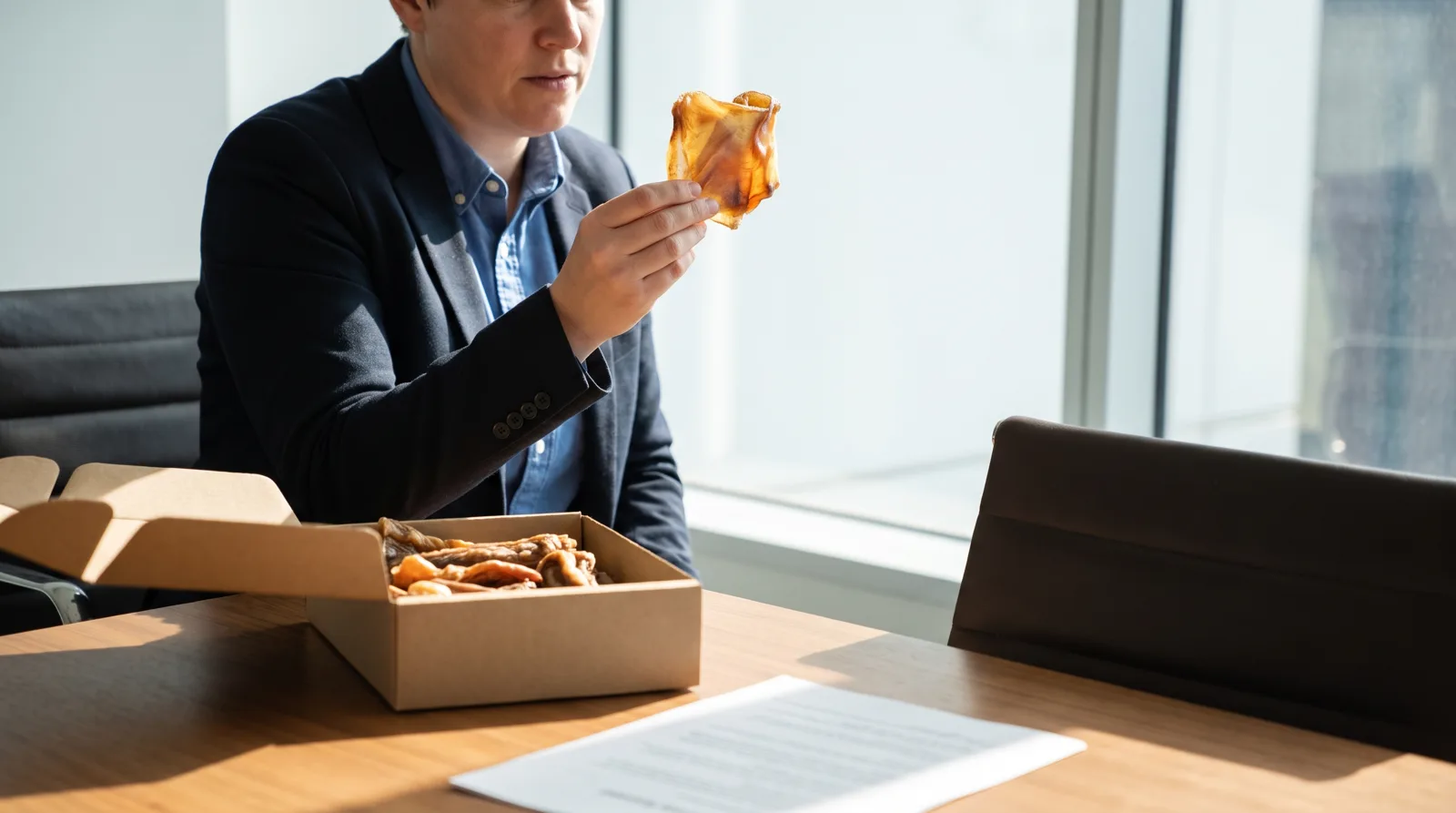
Vetting a dog treat supplier means checking three things before you place an order: that the company actually makes or controls the product, that it can document safety and compliance, and that the product you receive will match the samples you approved. A good price is easy to find; a supplier that passes all three checks takes more work.
This guide is for US pet brands, retailers and Amazon sellers comparing dog treat suppliers, whether they found them on a marketplace, at a trade show or through a sourcing agent. It ends with a checklist you can use for every supplier.
Where do buyers find dog treat suppliers?
Buyers usually find dog treat suppliers through B2B marketplaces, pet industry trade shows, industry directories, referrals and sourcing agents, or by contacting manufacturers directly from their websites. Each source gives you a list of names, not a vetted shortlist. The checks in this guide apply no matter where the first contact came from.
Is Alibaba a good place to find dog treats?
Alibaba and similar marketplaces list many dog treat sellers, and they are a quick way to see what products exist. The listings include manufacturers, trading companies and resellers, and it is not always clear which is which. Marketplace badges and verification labels describe what the platform checked, which may not cover food safety or US import requirements.
If you use a marketplace, treat it as a starting point. Ask who makes the product, request the facility details, and run the same document and sample checks you would for any other supplier. A direct supplier that already ships to US buyers and can explain the import paperwork is often a practical alternative to sourcing dog chews on Alibaba.
What should you ask a supplier before requesting samples?
- Do you manufacture the product, or do you source it from another facility?
- Is the facility registered with FDA, and can you share the registration details?
- Which products have you shipped to the US, and what documents traveled with them?
- For animal-origin chews, can you support a USDA APHIS import permit and provide a veterinary health certificate?
- What pathogen testing do you run on finished product, and who performs it?
- Can you produce to our specification and pack under our brand?
- What are your minimum order quantities and lead times for our products?
Clear, specific answers are a good sign. Vague answers, or answers that change between emails, are worth noting before you spend money on samples and courier fees.
How should you evaluate dog treat samples?
Evaluate samples against a written specification, not against a general impression. Measure and weigh a set of pieces, check color and surface, note the smell after the pack has been closed for a few days, and test how each piece breaks. Keep reference photos with a ruler in the frame. They become the standard every production lot is compared against.
Ask whether the samples come from regular production or were prepared specially. Samples that are better than normal output lead to disappointment on the first order. For chews, our guide to types of natural dog chews lists the size and texture points to specify for each product.
What should a certificate of analysis for dog treats show?
A certificate of analysis (COA) for dog treats should identify the product and lot, name the laboratory, list each test with its method, and show the result against a limit or specification. A COA that cannot be linked to a lot number on the carton has limited value.
| COA element | What to look for |
|---|---|
| Product and lot number | Matches the product name and the lot printed on cartons |
| Laboratory | Named lab, ideally accredited; ask whether it is independent |
| Pathogen tests | Salmonella at minimum; ask which other organisms are tested |
| Moisture or water activity | Result against the target agreed in the specification |
| Nutrient values | Support the guaranteed analysis printed on the label |
| Methods and dates | Test method named, sampling and report dates stated |
If a supplier sends only a generic certificate with no lot number, ask for a lot-specific report or arrange your own test with an independent lab.
Which documents should a reliable dog chew supplier provide?
A reliable dog chew supplier should be able to provide, on request, the facility FDA registration details, a description of its food safety plan under the FSMA Preventive Controls for Animal Food rule, finished-product test reports, a product specification and, for animal-origin products, the veterinary health certificate needed for USDA APHIS. As the US importer, you also need information from the supplier to complete your Foreign Supplier Verification Program (FSVP).
Our guides on FDA requirements for dog treats and the USDA APHIS import permit explain what each document is for. For the full sequence from supplier to US warehouse, see importing pet treats from an overseas manufacturer.
How do you audit a dog treat supplier?
A dog treat supplier audit can be done on site by your team, by a third-party auditing firm, or remotely through a video walk-through and document review. The aim is the same: confirm that the facility exists, that raw materials are traceable, that drying or cooking steps are controlled, and that finished product is tested and stored properly.
An on-site or third-party audit gives the most confidence, especially before a large or long-term order. A remote review is a reasonable first step for smaller orders, as long as it includes live video of production areas and not only prepared photos. Ask the auditing firm or your own quality advisor which standard they will audit against.
When does a pet treat sourcing agent help?
A pet treat sourcing agent can help when you do not have time to screen suppliers, visit facilities or manage communication across time zones. A good agent shortlists suppliers, coordinates samples and follows production. Ask how the agent is paid, whether it receives commissions from suppliers, and whether you will deal directly with the manufacturer. You remain responsible for compliance as the brand owner and importer, so the document checks still apply.
What red flags should you watch for?
- The supplier cannot say which facility makes the product
- Test reports have no lot numbers or no laboratory name
- Answers about FDA registration or USDA paperwork are vague
- Samples arrive very different from the photos or the specification
- Prices are far below other quotes with no explanation
- Pressure to pay in full before specifications and documents are agreed
What does a dog treat supplier checklist look like?
Use the same checklist for every supplier so you can compare them fairly.
| Check | Done when |
|---|---|
| Manufacturer identified | Facility name and address confirmed |
| FDA registration | Registration details provided |
| Food safety plan | Preventive controls described or shared |
| Lot-specific test reports | COA linked to a lot number |
| USDA APHIS support | Health certificate process confirmed for animal-origin products |
| Specification signed | Size, weight, moisture, packing agreed in writing |
| Samples approved | Reference photos and measurements on file |
| FSVP information | Supplier information needed by the importer provided |
| Label reviewed | Label checked against AAFCO model and state rules |
Labeling deserves its own review; see our guide to dog treat label requirements. If bully sticks are on your list, our wholesale bully sticks supplier guide covers grading and testing in detail.
Chewport works with partner facilities and can provide specifications, test reports and shipping documents on request. See how shipments are documented on our compliance and logistics page, or browse our natural chews.
Frequently asked questions
How do I find a dog treat manufacturer?
Use marketplaces, trade shows, directories, referrals or sourcing agents to build a list, then vet each supplier with document checks, samples and a written specification.
Is it safe to buy dog treats from Alibaba?
It can work, but marketplace listings mix manufacturers and traders. Confirm the facility, its FDA registration and lot-specific test reports before ordering.
What is a certificate of analysis for dog treats?
A lab report for a specific production lot that lists tests, methods and results, such as Salmonella testing and moisture.
Should I audit a dog treat supplier before ordering?
An on-site or third-party audit is useful before large or long-term orders. A remote review with live video can be a first step for smaller orders.
Do I need a sourcing agent to buy dog treats?
Not necessarily. An agent can save time, but ask how it is paid and keep direct access to the manufacturer and its documents.
What documents should a dog chew supplier provide?
FDA registration details, food safety plan information, lot-specific test reports, a signed specification and, for animal-origin chews, the veterinary health certificate for USDA APHIS.
Where are natural dog chews sourced?
US brands name different origins, such as Brazil, Argentina and the US, and some state which countries they avoid. For a buyer, the facility matters as much as the country: FDA registration, USDA APHIS eligibility and lot testing. Chewport works with partner facilities in Turkiye.
What is SQF certification?
SQF (Safe Quality Food) is a food safety certification benchmarked by the Global Food Safety Initiative. Many US retailers ask suppliers for a GFSI-recognized scheme such as SQF, BRCGS or FSSC 22000, so ask a supplier which scheme its facility holds.
Comparing dog treat suppliers?
Tell us the products you need, and we will send specifications, sample documents and a quote.
Request a quoteThe US-facing pet line of Export Partners LLC. Wholesale and private-label functional chews, natural dog chews and freeze-dried treats, sourced in Turkiye with FDA and USDA compliance handled on the supplier side.
Leave a Reply