Dog Treat MOQ: Minimum Order Quantities, Samples and Packaging
What sets the minimum order for private label dog treats and chews, and how to plan samples, packaging and a first order that stays manageable.
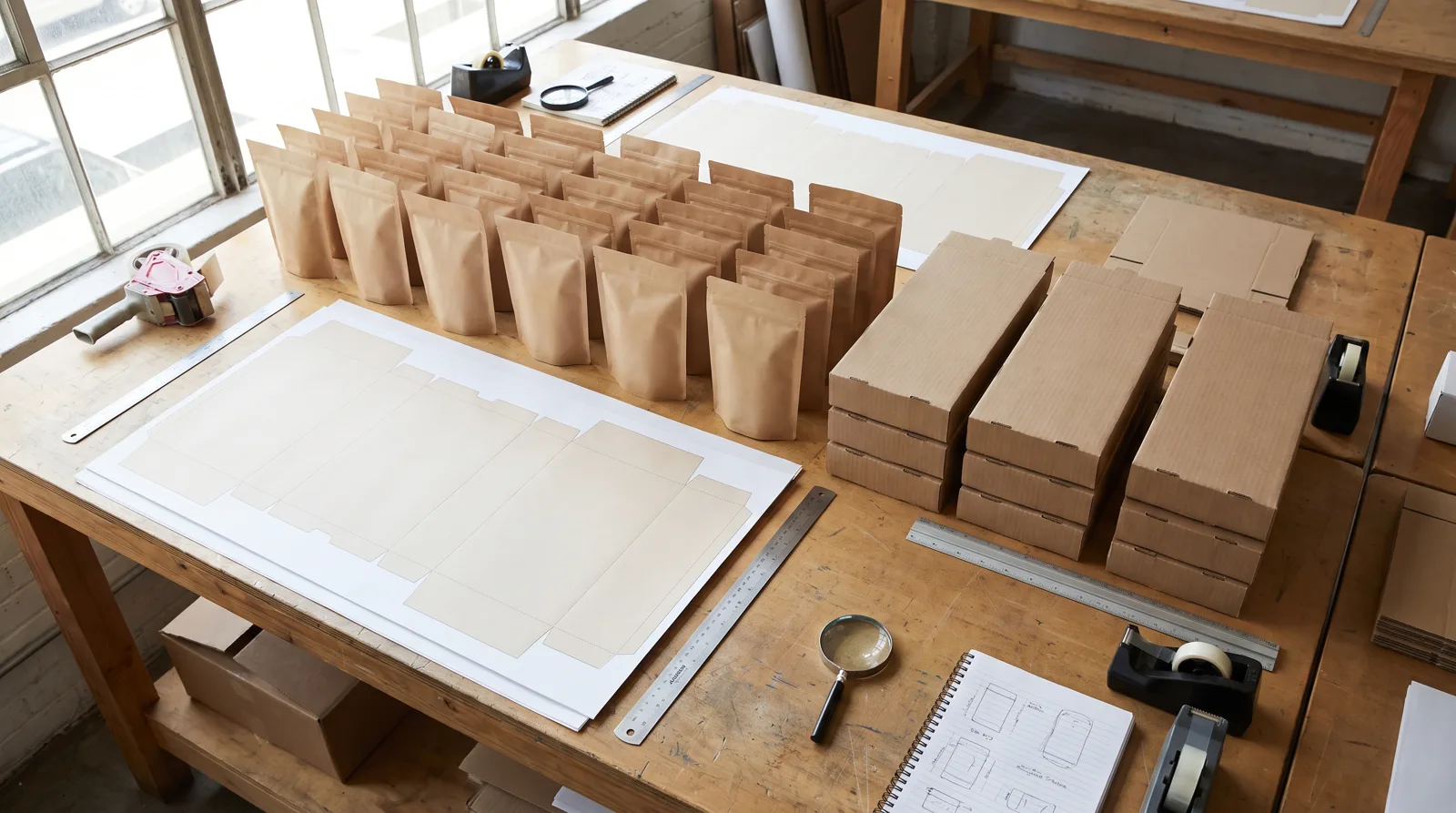
Minimum order quantity, or MOQ, is the smallest order a supplier will accept for a product, a pack format or a production run. For dog treats and chews, the MOQ is rarely a single fixed figure. It depends on how the product is made, how it is packed and how many versions of it you want on the first order.
This guide explains what drives MOQ for private label dog treats, how samples and packaging fit into the process, and how new brands, Amazon sellers and retailers can plan a first order that stays manageable.
What does MOQ mean for dog treats and chews?
For a dog treat supplier, MOQ usually applies at three levels at the same time: the product itself, the pack format and the printed packaging. A supplier may be able to produce a small quantity of bully sticks, for example, but still need a larger quantity for a custom printed pouch because the printer has its own minimum.
When you compare quotes, check which of these levels each MOQ refers to.
What drives the minimum order quantity?
Most MOQ discussions come down to a few cost drivers that sit on the supplier side:
- Production batch: drying, baking and freeze-drying run in batches, and a batch has a practical minimum size for the equipment
- Raw material lots: natural chews depend on available raw material, which is bought and processed in lots
- Packaging print runs: printed pouches, boxes and labels have their own minimums set by the printer
- SKU count: every extra size, flavor or pack format adds setup, changeover and separate testing
- Testing and documentation: lot testing and paperwork apply per lot, so very small lots carry the same fixed effort
Instead of asking only for a lower MOQ, ask which driver sets the minimum for your order and whether a different pack or a shared format would change it.
| MOQ driver | What sets it | How buyers often reduce it |
|---|---|---|
| Production batch | Equipment and drying or freeze-drying cycle | Choose standard products and sizes already in production |
| Raw material lot | Availability of the animal part or protein | Pick year-round items for the first order |
| Packaging print run | Printer minimums for pouches, boxes or labels | Start with stock pouches plus a printed label |
| SKU count | Setup, changeover and separate testing per SKU | Launch fewer SKUs, add sizes after sell-through |
| Testing and documents | Per-lot testing and export paperwork | Combine SKUs into fewer lots and one shipment |
Can private label dog treats start with a low MOQ?
Often yes, if the first order is built around flexibility. The most common way to keep a private label order small is to use the supplier’s standard products and sizes, a limited number of SKUs and a packaging route that does not require a large print run.
A low MOQ start is usually a trade-off. Unit cost tends to be higher on small runs because fixed costs are spread over fewer units. Many brands accept that on the first order to test sell-through, then move to larger runs and fully printed packaging once demand is clearer. Our guide on working with a private label dog treats manufacturer covers the rest of that process.
How do sample orders for dog chews work?
A sample order is the step before any MOQ discussion becomes final. It lets you check size, texture, color, smell and how each product breaks or splinters before you commit to a production run.
When you request samples, be specific about what you want to evaluate:
- The exact products, sizes and species you plan to sell
- Pieces from current production rather than hand-picked show samples, where possible
- The draft specification for each item, so you can compare samples against it
- Basic documentation, such as a recent test report, which can be provided on request
Measure and weigh a set of pieces, take photos with a ruler in the frame and keep a few pieces sealed for a week to check smell and moisture. If you compare several suppliers, evaluate all samples the same way. Our overview of types of natural dog chews lists what to specify for each product.
What are the options for custom dog treat packaging?
Packaging is often the part of the order with the highest minimum, so it is worth choosing the route early. Common options include:
| Packaging route | Typical use | MOQ impact |
|---|---|---|
| Bulk cartons with liner | Repacking in the US, bulk bins, food service style resale | Lowest, no printed retail pack needed |
| Stock pouch with printed label | First private label orders, test launches | Low to moderate, label print run only |
| Fully printed custom pouch | Established brands, Amazon listings, retail shelves | Higher, set by the pouch printer |
| Printed box or display carton | Retail counters and gift sets | Higher, set by the box printer |
Whatever the route, retail packs for dried chews and treats usually need a moisture and oxygen barrier, a reseal option where it fits the product, and space for all required label information. Freeze-dried products in particular depend on barrier packaging; see our page on freeze-dried treats for the product range.
What is pet treat display packaging?
Display packaging is the shelf-ready format retailers use to present treats at the counter or on a shelf: a printed carton that opens into a tray, a counter display box holding single chews, or a shipper that goes straight onto the floor. For pet stores and boutiques, display packaging can make single chews easier to sell as impulse items.
Display formats add a second packaging layer, so they usually carry their own print minimum. If you are not sure a display will be used, test the product first in standard packs and add the display once a retail partner confirms the format.
How does SKU count affect your first order?
Every SKU is a separate product to produce, pack, label, test and track. Adding a second size of the same chew can be close to doubling the setup work, even if the total quantity stays the same.
A focused first order, built around a small number of well-chosen products, usually reaches each SKU’s minimum more easily and gives clearer sell-through data. You can add sizes, flavors and bundles to the products that move fastest. Brands starting with natural chews often anchor the range on one bully stick format; our guide to choosing a wholesale bully sticks supplier explains how to specify it.
How do labeling and compliance affect MOQ planning?
Labels are part of the packaging run, so they need to be right before printing. A label correction after a print run means reprinting, and that cost is the same whether the order was large or small.
Before you approve artwork, check the ingredient statement, guaranteed analysis, net quantity, the responsible company’s name and address and any state registration rules. Our article on dog treat label requirements walks through the AAFCO model points. For animal-origin chews, import paperwork such as the USDA APHIS import permit should be confirmed before production is scheduled, so the first lot is not held waiting for documents.
How should you plan reorders after the first order?
The first order sets the pattern for reorders. Track sell-through per SKU, note how long each product takes to sell and check shelf life against that pace. A product with a long shelf life gives more room for larger runs; a product with a shorter shelf life is often better reordered more often in smaller lots.
Share your expected reorder cadence with the supplier early. When a supplier knows roughly when the next order will come, raw material and packaging can sometimes be planned across orders, which can make minimums easier to meet over time.
What should you ask a dog treat supplier about MOQ?
- Which level does the MOQ apply to: product, pack format or printed packaging?
- Can several SKUs share one production lot or one shipment?
- Is there a stock pouch or label option for the first order?
- How are samples supplied, and do they come from current production?
- Which documents can be provided per lot, such as test reports and certificates?
- How does the unit price change as quantities increase?
Clear answers to these questions make quotes comparable. If you are new to importing, our step-by-step guide on how to import dog treats into the USA explains the process from quote to delivery, and our compliance and logistics page covers how shipments are prepared.
Frequently asked questions
What is a typical MOQ for private label dog treats?
There is no single typical figure. The minimum depends on the product, the production batch, the number of SKUs and the packaging route. Ask the supplier which of these sets the minimum for your order.
Why is the packaging MOQ higher than the product MOQ?
Printed pouches, boxes and labels are produced by printers that have their own minimum runs. Starting with a stock pouch and a printed label can lower that minimum for a first order.
Can I order samples before committing to an MOQ?
Yes, samples are the normal first step. They let you check size, texture and appearance against a draft specification before any production run is planned.
Can different products be combined to reach a minimum?
Often several SKUs can share one shipment, and sometimes one lot. Each SKU may still have its own minimum, so confirm this with the supplier.
Does a smaller order cost more per unit?
Usually yes, because setup, testing and documentation costs are spread over fewer units. Many brands accept this on a first order and move to larger runs later.
Do I need custom display packaging for pet stores?
Not always. Many products are first tested in standard packs or bulk formats, and a display carton is added once a retailer confirms it will be used.
Planning a first private label order?
Tell us the products, pack format and quantities you have in mind, and we will explain the minimums and send a quote.
Request a quoteThe US-facing pet line of Export Partners LLC. Wholesale and private-label functional chews, natural dog chews and freeze-dried treats, sourced in Turkiye with FDA and USDA compliance handled on the supplier side.
Leave a Reply